
Martin Gouldstone brings more than 30 years of life sciences leadership, spanning biotech, pharma, CROs and corporate finance. A seasoned CEO, chairman and dealmaker, he has led and advised some of the sector's most innovative companies, building strategic partnerships, driving growth and navigating complex transactions. Today, he chairs and advises a portfolio of listed and private life sciences businesses including, of course, the ValiRx Group, combining deep commercial expertise with a proven track record in scaling healthcare innovation.
When Martin Gouldstone's five-year-old German Longhaired Pointer, Noah, was diagnosed with an aggressive kidney cancer, the experience became deeply personal. It also reinforced something Martin had observed throughout his 30-year career in oncology: the urgent need for better datasets, evidence, treatments and outcomes in animal health.
A Shocking Diagnosis
In summer 2025, Noah's health deteriorated rapidly. He became lethargic, lost weight and appetite, and started passing blood in his urine. An ultrasound revealed a devastating diagnosis: renal carcinoma, an aggressive form of kidney cancer.
"The oncologist told us Noah had an estimated survival of just three months," recalls Martin. "What surprised me wasn't the diagnosis itself, but how little supporting clinical data was available to help guide treatment decisions."
Following emergency surgery to remove the affected kidney, Noah was prescribed a tyrosine kinase inhibitor (TKI) to help suppress any remaining cancer cells and reduce the risk of recurrence.
The Data Gap in Veterinary Oncology
As a life sciences executive with decades of oncology experience, Martin naturally turned to the scientific literature for answers. What he found was striking.
"There simply wasn't the depth of evidence you would expect in human oncology," he says. "The oncologist and I were reviewing many of the same papers because there was very little published data available on outcomes, treatment approaches or long-term survival."
This lack of robust clinical evidence remains one of the biggest challenges in veterinary oncology. While specialist vets provide exceptional care, there are far fewer studies, biomarkers and treatment datasets available compared with human medicine.
A Different Outcome
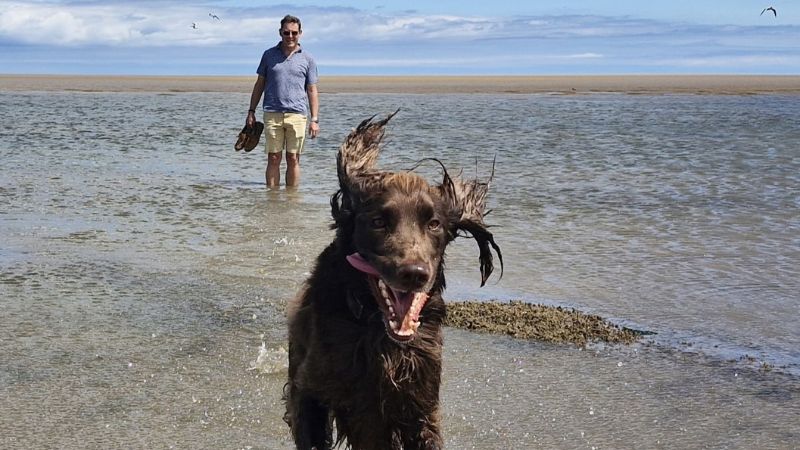
More than a year after his diagnosis and surgery, Noah continues to defy expectations and he’s back to his normal bouncy self!
Regular scans and examinations have shown no evidence of disease recurrence, and he is once again, energetic, curious and a full participating member of the family.
"It's a hopeful story, but it's also a reminder that outcomes can vary enormously," says Martin. "Another dog diagnosed around the same time with a similar condition sadly didn't survive. That's why we need more data, better understanding and more treatment options."
Why ValiRx Animal Health Matters
As Group Chairman of ValiRx, Martin saw a clear opportunity when the company began exploring the development of oncology assets for companion animals.
"Having gone through this experience with Noah, I immediately understood the potential impact. If we can generate rigorous clinical data, develop new therapies and improve outcomes for dogs facing cancer, then that's something worth pursuing."
ValiRx Animal Health is focused on translating expertise from human oncology into innovative solutions for companion animals. By building stronger clinical evidence and developing new treatment approaches, the company aims to address significant unmet needs in veterinary cancer care.
Looking Ahead
For Martin, the mission is both professional and personal.
"There are still too many unanswered questions in veterinary oncology. If our work can help vets make better-informed treatment decisions and give more dogs the chance that Noah had, that would be an extraordinary achievement."
Today, Noah is back to enjoying life, proving that hope, innovation and determination can sometimes overwrite prognosis.
